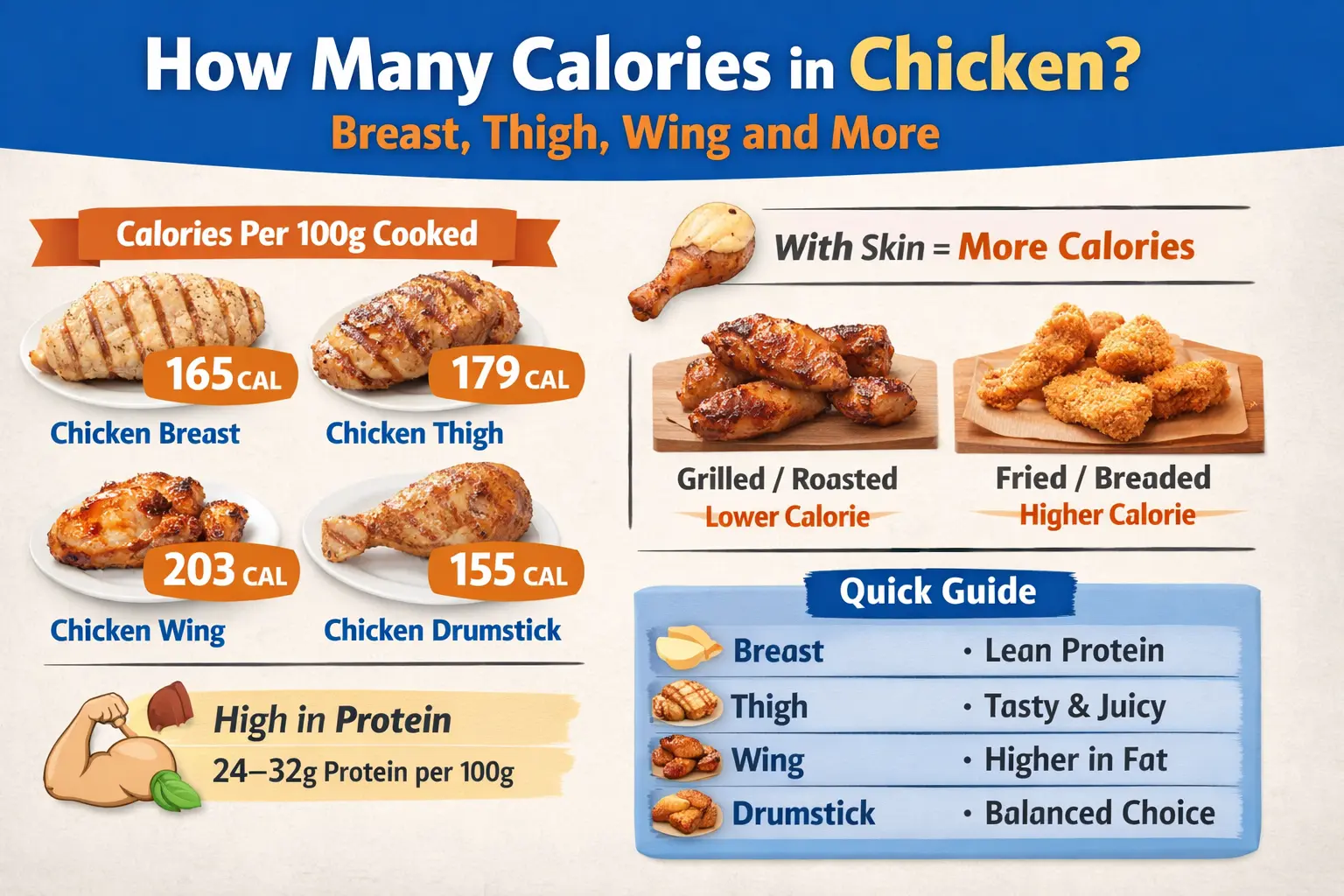

How Many Calories in Chicken? Breast, Thigh, Wing and More
Chicken is one of the most widely eaten proteins worldwide. It’s affordable, versatile, and commonly seen as a healthy choice. But when people ask about calories in chicken, the answer depends on two things: the cut of meat and how it’s cooked.
Here’s a simple, easy-to-understand breakdown.
Why Calories in Chicken Are Not the Same
Chicken contains both lean muscle and fatty areas. Some parts are naturally low in fat, while others contain more. On top of that, cooking methods like frying or adding sauces can significantly raise calorie intake.
This is why two chicken meals can look similar but deliver very different nutrition.
Calories in Chicken Cuts (Cooked, Skinless, per 100 g)
- Chicken breast
Chicken breast is the leanest cut. It contains about 165 calories and is high in protein, making it popular for weight loss and muscle building. - Chicken thigh
Chicken thighs contain slightly more fat, which makes them juicier. A cooked thigh has around 179 calories and is often preferred for taste. - Chicken drumstick
Drumsticks offer a balance between flavor and calories, with roughly 155 calories per 100 grams. - Chicken wing
Chicken wings are higher in fat and contain about 203 calories. They’re enjoyable but easier to overeat.
Does Chicken Skin Increase Calories?
Yes. Chicken skin is high in fat and can add a significant number of calories. Removing the skin is one of the simplest ways to reduce calorie intake without changing how much you eat.
For healthier meals, skinless chicken is the better option.
How Cooking Method Changes Chicken Calories
Cooking style plays a major role in chicken nutrition.
Grilling, roasting, or steaming chicken keeps calories close to their natural level. Frying, breading, or cooking in oil adds extra fat and increases calories quickly.
A healthy cut can become a high-calorie meal depending on preparation.
Chicken Nutrition Beyond Calories
Chicken is also rich in high-quality protein, which supports muscle repair, satiety, and metabolism. Most cooked chicken provides 24–32 grams of protein per 100 grams, making it a strong choice for balanced diets.
What This Means for Everyday Eating
If your goal is lower calories, choose chicken breast or drumsticks, remove the skin, and cook with minimal oil.
If flavor matters more and calories are less of a concern, chicken thighs are a good middle ground.
Wings and fried chicken are best enjoyed occasionally.
Bottom Line
Calories in chicken vary by cut, skin, and cooking method. Making small choices — like removing skin or grilling instead of frying — can make a big difference over time.